
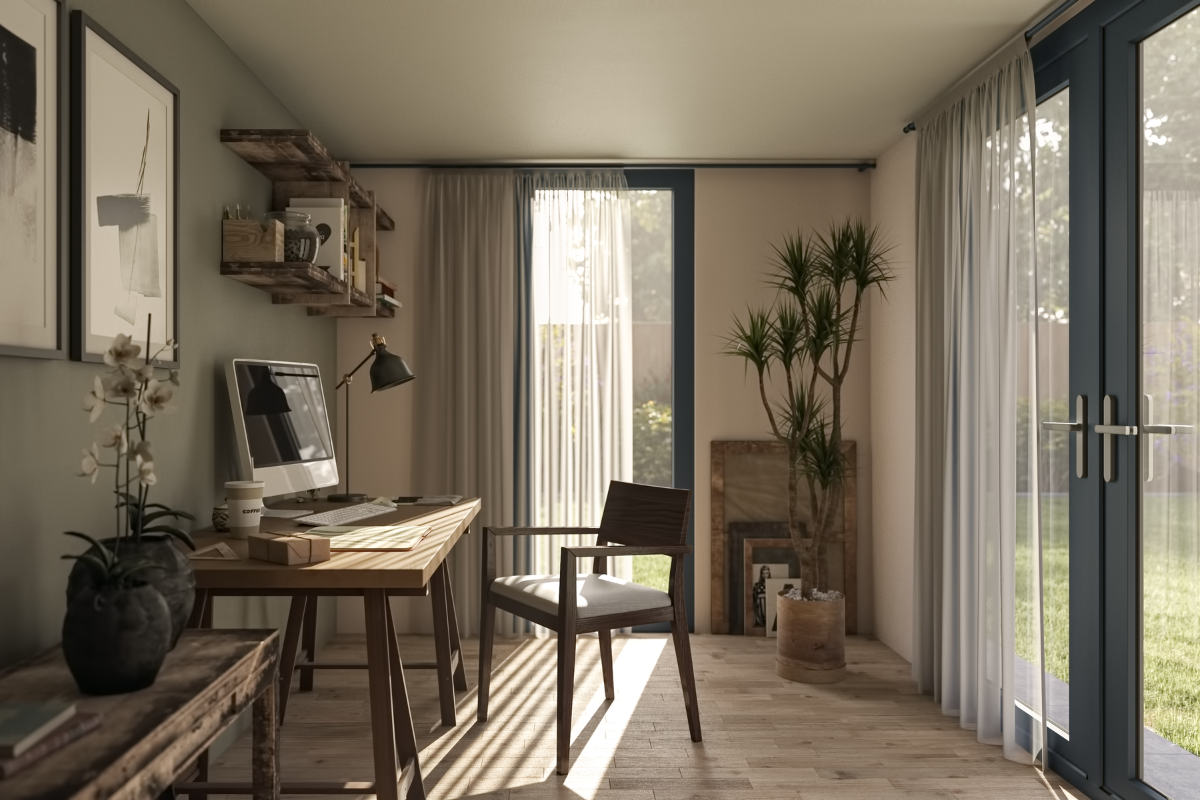
When investing in a garden room, it’s important to consider how the space will be used throughout the year so you can make the most out of your garden building.
As you want your garden room to be an extension of your home, creating a space that is warm and cosy in the cold, dark winter months, but cool and light throughout summer is essential. A garden room should be a functional space which can be used all year round.
Getting electricity set up in your garden room will help ensure that it can be used in every season of the year. This makes it possible to not only run all the equipment you might need, whether that’s a computer, gym equipment or TV, but essential lighting and heating too. Heating and powering your garden room is crucial for a useable space, all of which Nest Home Additions have solutions for.
Here we dive into the options which are available for you to choose from, helping you to create your perfect garden room space.
Garden Room Lighting
Lighting can make a huge difference to the ambience of the space – build your own cosy setting, set up a well-lit workstation, or create a bright and energetic area to work out in.
However you choose to use your garden room, the lighting can make a significant difference to how you use the space. Whether you choose to install down lighting, pendant lights or table lamps, it’s essential to consider the end use of the room and where it’s best to position your electric points.
At Nest, we prefer the use of internal downlights for a modern look, it also helps to maximise your floor and wall space.
Outside lighting is also important to consider, as it can help to create an inviting ambience. Outside lights could be positioned on the decking, pathway, or directly on the garden building itself.
Outside lighting needs to be IP (Ingress Protection) rated, which means it’s waterproof and suitable for outdoor areas. Where the lighting is positioned will determine the level of IP rating required. For your garden room, we would recommend using IP65 rated lighting, which is suitable for harsh weather conditions.
Finally, don’t forget about natural lighting. By opting for larger windows and doors or including more in different areas will allow for natural light to flood the room. It’s also worth considering the glare of the sun and your privacy – installing blinds can help control the sunlight and create a more private space.
Heating your garden building
Our team of experts at Nest Home Additions are commonly asked, ‘what’s the best way to heat a garden room?’. There are a range of different options to choose from, depending on the size of your garden room and the usage of the room. However, before considering your heating, it’s important to make sure your garden room structure is well insulated.
Insulation
It is essential when installing a garden room that the base structure is properly insulated – this includes the floor, walls and roof. Having a well-insulated garden room structure will ensure that it performs more efficiently throughout the winter months.
At Nest Home Additions, we use Structural Insulated Panels (SIPs) for our garden room buildings. A modern building material, it’s made from high performing polyurethane foam sandwiched between two structural OSB facings, this makes them extremely strong, durable and energy efficient. SIPs are excellent at creating an insulated garden room – the seamlessly connected structurally insulated panels have 97mm thick walls and 122mm thick roof and floor.
The use of energy efficient, A-Rated, UPVC double glazed windows, doors will also play a role in stopping additional heat escaping through the windows in your garden room. UPVC windows provide exceptional energy efficiency and insulation, helping to reduce heat loss and lower energy bills.
Electric Heaters
So, what options are there for heating?
Let’s start with our most popular and cost-efficient option, electric heaters. Efficient and reliable, they can help to maintain a consistent temperature in your garden building when you need it.
The benefit of an electric radiator is that they’re simple to plug into the existing electricity supply. Thermostats which can be programmed remotely are also easy to control and can result in energy saving.
Electric panel heaters can easily fit into a garden room. Slim and discreet, they take up minimal space, leaving more available space to fit out the garden room with your chosen items.
As our buildings are so well insulated vs others in the market, you building only requires minimal heating, so an electric heater is ideal.
Underfloor Heating
Another heating option for your garden room is underfloor heating. Normally controlled using warm water pipes, it’s possible with a garden room to get electric underfloor heating laid under your insulated garden room floors.
Despite being a more expensive option, underfloor heating is an efficient method of heating your garden room and cost-effective long term. Additionally, underfloor heating can heat up your garden room, without taking up much needed wall space.
Wood Burner
For a cosy, relaxing atmosphere, a log burner is an alternative option to electric heating. A renewable and sustainable energy source, a wood burning stove can keep your garden room snug and warm.
If you choose to use this as your method of heating, there are a few things to consider:
- Ensure installation is completed by a qualified professional.
- Building regulations might be required, so it’s best to speak to your local council to check what you require before installing.
- Also check if your area is a non-smoke control area or not, as this will affect the appliance you require.
- Consider the positioning of the wood burner, keep the correct distance between the stove and combustible materials.
- Finally, plan what will surround the wood burner. It’s essential to install a protective hearth to help prevent fire hazards.
A wood burning stove can make your garden room comfortable and warm, but always take into consideration the additional research, set up and protection that’s required.
Ground or air source heat pump
Finally, it is possible to heat your garden building using a ground source heat pump or an air source heat pump.
Ground source heat pumps can be expensive for initial installation due to the extensive groundwork, which is required, whereas air source is generally slightly lower in costs in terms of initial installation.
Both are effective methods of heating a garden room; however, air source heat pumps can be less efficient in cold weather as they need to work harder. Ground source heat pumps are often seen as more efficient and eco-friendly in comparison, with lower long-term running costs.
Both are an investment. If you don’t want to pay as much upfront or have extensive digging for installation, air source might be more suitable. But for colder climates, and if you have the budget available for installation, a ground source heat pump is an effective solution.
Whether using your garden room as a garden studio, gym, entertaining space or cosy snug, planning your lighting and heating should be considered from the initial plans.
Here at Nest Home Additions, we can help you make the right choice for your garden room, providing you with the information you might need to make an informed decision on powering your garden room.
If you’re looking to install a garden building, get in touch with our team of experts to find out how we can help create the perfect space for you.
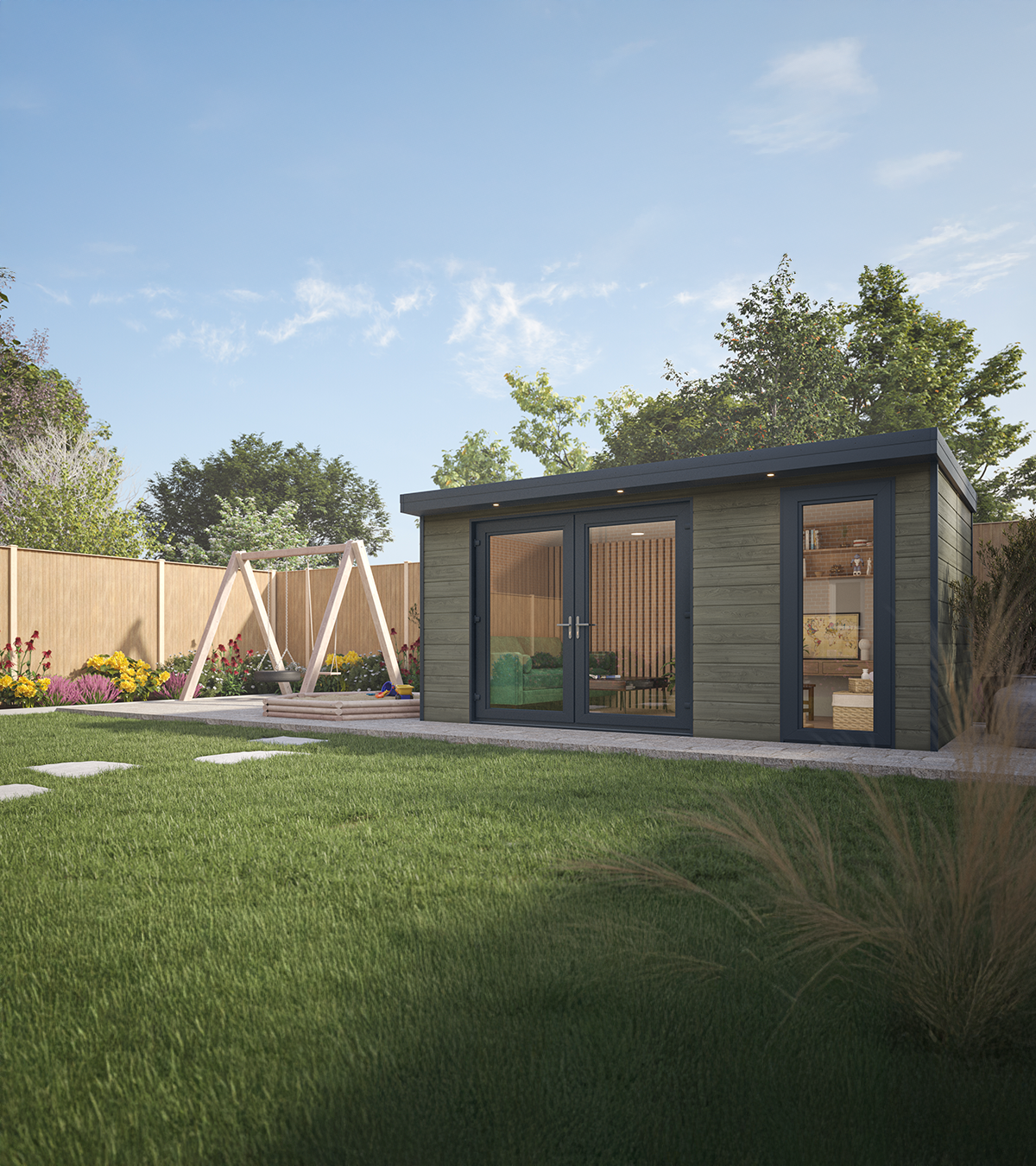
A garden room is currently one of the most desirable home upgrades, it’s an effective way of expanding your home and providing you with much needed additional living space. Whether you choose to use your garden building for a home office, gym, studio, entertaining space or somewhere to relax and unwind, a garden room can

Planning permission for garden rooms can feel confusing, but it doesn’t have to be. In this article, we break down the essential rules and practical requirements of constructing a garden building that is safe, durable and legal.

We answer some of the most frequently asked questions about foundations, to ensure you understand everything you need to know about garden rooms or garden buildings.