

Garden rooms have quickly become one of the most desirable home upgrades in the UK. They offer a versatile space that combines comfort, style and practicality, while allowing you to make the most of your outdoor spaces.
Whether you want a home office, a bar, entertainment space or even a home gym, a well-designed garden room can completely transform the way you use your property all year round.
But before you jump into planning your building, it’s important to understand the key practicalities that come with building a garden room so you can be prepared for the home upgrade project ahead. It’s essential that homeowners are aware of the requirements surrounding planning permission, whether foundations are required, the placement of the garden building and how the structure may impact your neighbours.
Whilst it can seem overwhelming, it’s essential that you have all the necessary information to hand prior to your garden room build and the right partner.
The expert team at Nest Home Additions answer some of the most frequently asked questions about foundations, to ensure you understand everything you need to know about garden rooms or garden buildings.
Do I need foundations for a garden room?
Just like any permanent building, a garden room requires an adequate foundation base to remain stable. Without the correct support, the structure may move or settle unevenly over time, which can lead to cracks in the walls, damp problems, or doors and windows that no longer open and close properly. A good foundation not only keeps your garden room level but also helps it last for many years with minimal maintenance.
There are a few different foundation options to consider, and the right one often depends on the size of the building and the ground conditions in your garden. Here we deep dive into some of the options available and what would work best for your garden room.
Existing Base Installations
Occasionally there’s already concrete slabs or an adequate patio in place – in this instance, adjustable, heavy-duty resin supports help to create a perfectly level base without the need to break up the surface.
These adjustable, heavy-duty resin supports consist of a heavy-duty base plate, and a central column to allow for height adjustments to the floor of your building, ensuring a level surface, whilst remaining strong and robust to take heavy loads. These packers also create excellent air circulation under the building, helping to prevent damp.
However, it is important not to assume every patio is adequate, and so the ground should be checked before going ahead.
Ground Screws
Ground screws are becoming increasingly popular for garden room, extension and annexe installations where there’s no suitable base present. An innovative solution, ground screws are quicker to install, less disruptive to your garden and suitable for a wide range of soil types and ground conditions, including sloped, uneven or hard-to-access areas without compromising strength.
As they don’t require specific weather conditions for installation, ground screws can be installed all year round, making them extremely versatile. As they require less digging for installation, there’s also less mess involved.
Ground screws have a much lower carbon footprint compared with concrete production. And, as they can also be removed and reused, they are a more sustainable choice.
Block Base
When ground screws are not suitable, at Nest Home Additions we also offer other solutions such as a block base option, which is a very common and popular method. This requires a small bit of digging to an appropriate level to use blocks that support the weight of the garden building.
Once the grass and vegetation have been removed from the area and ground dug to the required depth, a layer of hardcore is put into position and the concrete blocks are laid on top. This helps to create a solid and level base for the garden room to be erected.
Which foundations should I choose for my garden room?
When choosing the best foundations for your garden room, this typically depends on soil type, site conditions and the size of the building but at Nest Home Additions, where no suitable base is present our preferred method would be heavy duty ground screws.
Regardless of the route we use, the principle is the same – a garden room cannot be installed onto bare ground, it needs a properly engineered base to remain sound with adequate support to ensure the load is spread correctly.
What is most important is ensuring that the base meets building control standards if the structure requires approval, and that it can bear the load without risk of movement. Cutting corners on footings brings problems with stability and dampness, which can be costly and difficult to correct in the future which is why here at Nest Home Additions we only use proven methods.
How far does a garden room need to be from the house?
When planning the positioning of the foundations of your garden room, it’s important to consider how far the garden room needs to be from your house.
In the UK, how close you can build a garden room to a boundary depends on its size and height. If your garden room measures under 15 square metres and it is not intended for sleeping, it can generally be built right up to the boundary without needing building regulations approval.
For structures between 15 and 30 square metres, the usual requirement is to place the building at least one metre from any boundary line unless you use non-combustible materials for the external walls closest to the edge of your property. These rules are designed to ensure compliance with UK planning permission and building regulations.
Height restrictions do also apply. If your garden room is within two metres of a boundary its maximum permitted height is 2.5 metres. Anything taller than this must be built further away.
Where the building is more than two metres from the boundary, greater heights may be permitted (up to four metres for a dual-pitched roof or around three metres for other roof types). In all cases, the structure must not cover more than 50% of your garden space, including any other outbuildings.
Because regulations can vary by location, particularly in conservation areas or near listed buildings, it is always worth checking with your local planning office before committing to a design to prevent any delays in the future.
Does a garden room add value?
A high-quality garden room can boost the value of your home by between 5 and 15 percent according to Country Living Magazine, depending on its quality. Nest Home Additions only use high quality materials to ensure homeowners can realise the benefit at house sale too.
Buyers are increasingly seeing a garden room as a huge selling point.
Beyond the numbers, garden rooms deliver practical benefits that buyers love – more usable space, flexibility and enhanced appeal.
For example, properties with garden rooms tend to show up more often in buyers searches, especially among people wanting home offices, studios or guest rooms. They can also help your home to sell faster – having that extra, purpose-built space is becoming increasingly popular for buyers.
It is also worth remembering that buyers want something that looks like a natural extension of their home, rather than just a ‘shed’ in the garden. By choosing high quality materials, making sure it’s professionally finished and keeping it in line with the style of your property can all make a huge difference when it comes to selling.
By considering these key factors early in the planning process, you will set yourself up for a smoother build and a space that truly meets your needs. A garden room is not just an extension of your home but an investment in your lifestyle, offering flexibility, comfort and long-term value.
With the right design, your garden room can become a seamless blend of indoor comfort and outdoor living, tailored perfectly to the way you want to live.
Ready to explore designing and building your own garden room? Get in touch with us today to discuss your dream garden room with a member of our expert team.
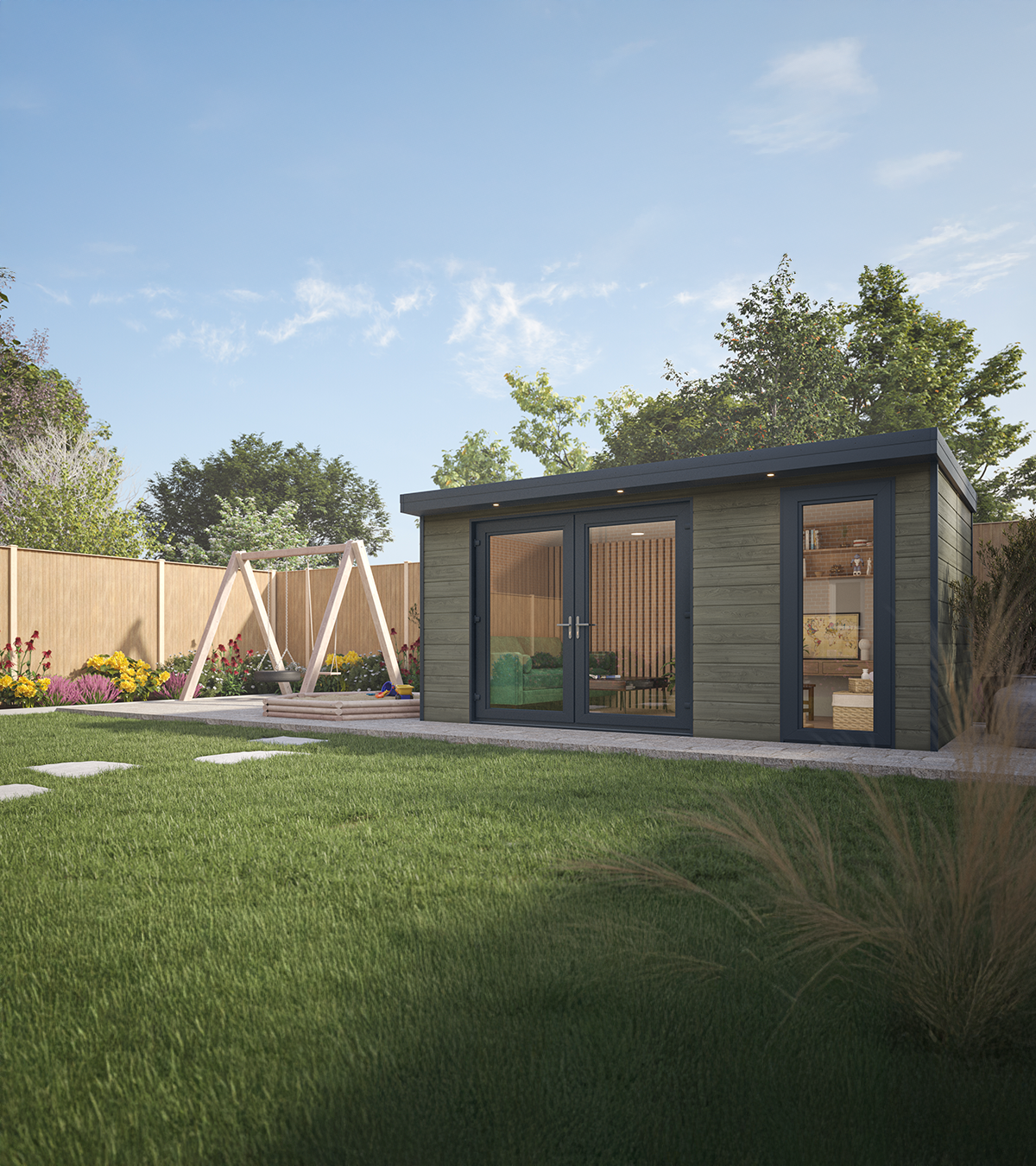
A garden room is currently one of the most desirable home upgrades, it’s an effective way of expanding your home and providing you with much needed additional living space. Whether you choose to use your garden building for a home office, gym, studio, entertaining space or somewhere to relax and unwind, a garden room can
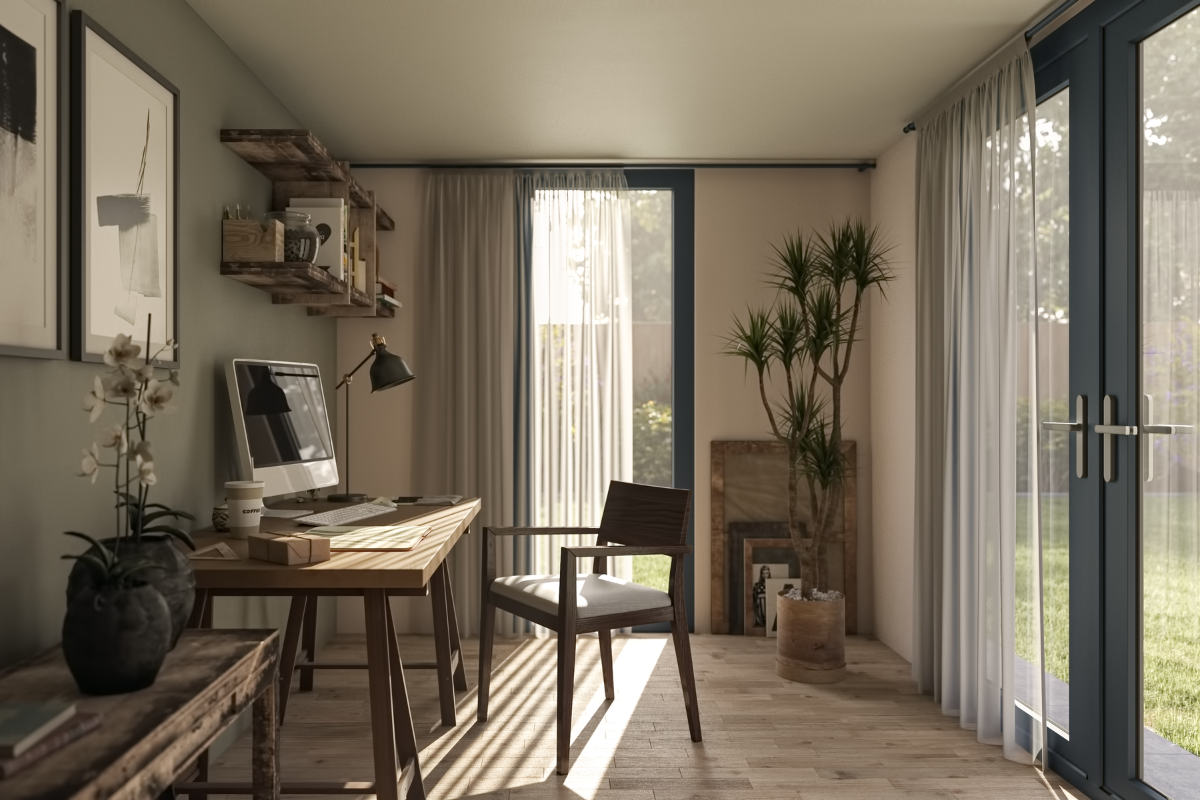
We provide some helpful advice about how to make the most of your garden room all year round, creating a space that is warm and cosy in the cold, dark winter months, but cool and light throughout summer.

Planning permission for garden rooms can feel confusing, but it doesn’t have to be. In this article, we break down the essential rules and practical requirements of constructing a garden building that is safe, durable and legal.